
Water-Based vs Solvent TIJ Ink Cartridges: Which to Choose
Water-based vs solvent TIJ cartridge: the right choice depends on whether your surface absorbs ink. Choose a water-based cartridge for porous materials such as cartons, paper bags and wood. Choose a solvent quick-drying cartridge for non-porous or coated surfaces such as film, plastic, metal and glass, where water-based ink cannot soak in and would smear.
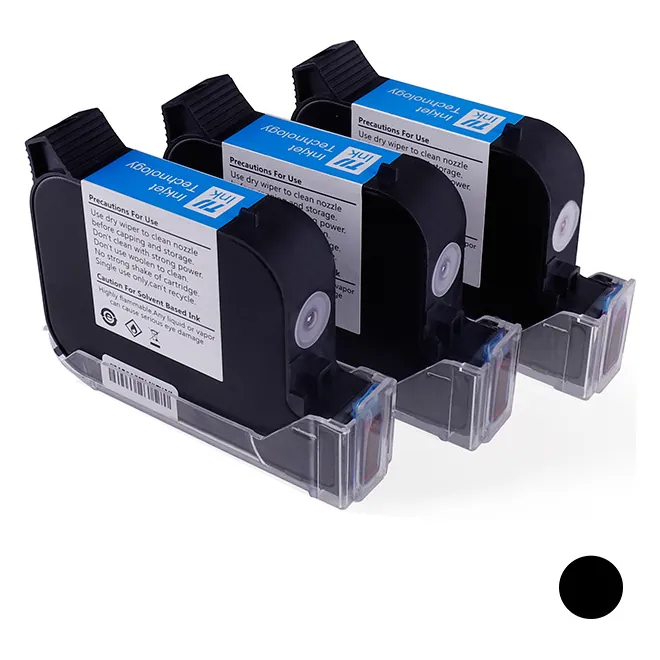
This guide explains how the two ink types work, compares them in one table, lists the MufengTech cartridge models for each, and gives a simple test plan so you can confirm the right cartridge on your own products before you order in volume.
What is a water-based TIJ cartridge?
A water-based TIJ cartridge is a thermal inkjet cartridge filled with ink that uses water as its main carrier. On a porous surface the ink is absorbed into the fibres, so the code fixes itself without needing fast evaporation.
MufengTech water-based cartridges (models MFK120 and MFK125 in black, MFK121 in grey) hold 42ml, print up to 12.7mm (0.5 inch) high and carry a listed warranty of 12 months. They are designed for absorbent materials such as wood, cardboard boxes, outer cartons and absorbent paper packaging bags. This is the same ink family as the HP45-type cartridge used in many coders.
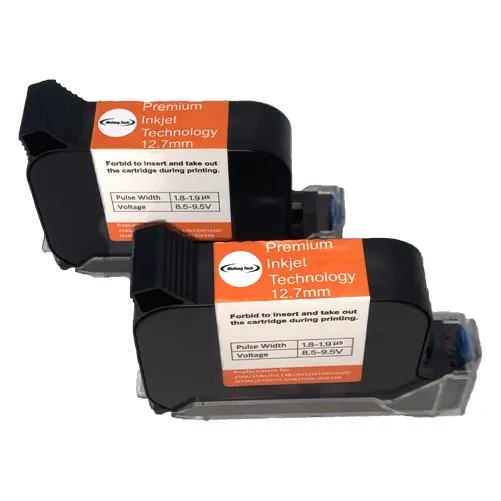
What is a solvent quick-drying TIJ cartridge?
A solvent quick-drying TIJ cartridge uses a fast-evaporating solvent as the ink carrier. Instead of soaking in, the ink dries on top of the surface and bonds to it, which makes it suitable for materials that do not absorb ink.
Our black solvent cartridges (models MFK708, MFK709 and MFK706) hold 42ml. MFK708 and MFK709 print 12.7mm high, and MFK706 prints 25.4mm (1 inch) high. The listed warranty is 9 months. The ink dries in about 3 to 5 seconds and is used on film, transparent plastic pipe, wood, stone, ceramic tile, metal, glass, medicine packaging, outer boxes, packaging bags and woven bags. Colour solvent cartridges and white ink cartridges are also available for dark or coloured surfaces.
Water-based vs solvent TIJ cartridge: comparison table
| Point | Water-based TIJ cartridge | Solvent quick-drying TIJ cartridge |
|---|---|---|
| How the ink dries | Absorbs into porous material | Solvent evaporates; ink dries on the surface in about 3–5 seconds |
| Best surfaces | Cartons, outer boxes, paper bags, absorbent paper, untreated wood | Film, plastic, metal, glass, ceramic tile, stone, coated packaging, woven bags |
| On non-porous surfaces | Stays wet and smears | Designed for them |
| MufengTech models | MFK120, MFK125 (black), MFK121 (grey) | MFK708, MFK709 (12.7mm), MFK706 (25.4mm); colour and white versions |
| Print height | 12.7mm | 12.7mm or 25.4mm |
| Volume | 42ml | 42ml |
| Listed warranty | 12 months | 9 months |
| Care when idle | Cap the cartridge to protect the nozzles | Close the protective cap promptly; the fast-drying ink can clog nozzles if left open |
When to choose a water-based cartridge
A water-based cartridge is the natural choice when every product you code is porous. Typical jobs are expiry dates and batch numbers on corrugated shipping cartons, lot codes on paper sacks, and marks on untreated timber or pallets.
On these surfaces water-based ink gives a clear, high-definition code and the nozzles are less sensitive to short pauses than with fast-drying solvent ink. See the TIJ water-based ink cartridge page for the full specification table.
When to choose a solvent quick-drying cartridge
Choose solvent ink as soon as the surface is sealed, coated or smooth. Common examples are plastic bottles and caps, PE or PP film pouches, metal parts and cans, glass jars, glossy or laminated cartons, and PVC pipe.
A practical test: put a drop of water on the surface. If it beads up and does not soak in within a few seconds, a water-based code will smear, and you need a TIJ black solvent quick-drying ink cartridge. For dark plastics or coloured film where black is hard to read, ask about the white ink cartridges or colour solvent versions.
Other TIJ ink types to know
Water-based and solvent cover most coding jobs, but three special inks solve specific problems:
- UV curing cartridges (models 2MKBK611 black and 2MKWT612 white) are cured by a UV lamp, so the ink dries almost instantly. They need a UV curing set-up on the line.
- Food-grade cartridges (model 3MFPK201, magenta) are made for printing directly on food packaging surfaces for traceability.
- Invisible ink cartridges print codes that are read under UV light, for anti-counterfeiting and hidden tracking marks.
How to choose and test the right TIJ ink in 6 steps
- List every surface. Write down each product and packaging material you will code, including coatings, labels and films.
- Do the water drop test. Water that soaks in points to water-based ink; water that beads up points to solvent ink.
- Check the code height. If you need more than 12.7mm in one pass on a non-porous surface, a 25.4mm solvent cartridge such as MFK706 is an option.
- Check contrast. Black works on light surfaces. On dark or coloured materials, consider white or colour solvent ink.
- Confirm the coder. Make sure your handheld or online TIJ coder supports the cartridge and that firing voltage and pulse width are set to the values on the cartridge specification.
- Print a sample and rub it. Print real products, wait for the drying time, then rub with a finger. If the code smears or rubs off, change the ink type before ordering in volume.
Care and storage tips
Solvent cartridges dry fast by design, so close the protective cap as soon as you pause printing. If the nozzle becomes blocked, wipe it gently with a soft paper towel. Water-based cartridges should also be capped when not in use and kept away from heat and direct sun. Store cartridges upright in their packaging and use older stock first.
Running CIJ printers on the same line for bottles or cables? Our sister site cijinkjet.com covers continuous inkjet printers, inks and make-up solvents.
FAQ: Water-based vs solvent TIJ cartridges
Can I use a water-based TIJ cartridge on plastic?
Usually not. Plastic does not absorb water-based ink, so the code stays wet and smears. Use a solvent quick-drying TIJ cartridge for plastic, film, metal and glass.
How fast does solvent TIJ ink dry?
MufengTech black solvent quick-drying cartridges dry in about 3 to 5 seconds, depending on the surface and conditions.
Is HP45-type ink water-based or solvent?
The HP45-type cartridge uses water-based black ink, which is meant for porous materials such as paper, cartons and wood.
Why does my solvent cartridge clog?
Solvent ink is designed to dry quickly, so an uncapped cartridge can dry at the nozzles during a pause. Close the protective cap whenever you stop printing and wipe the nozzle gently with a soft paper towel if needed.
How do I get a cartridge recommendation?
Contact Shenzhen Mufeng Technology Limited Company on WhatsApp +86 158 1405 1051 with your product, surface material and code layout.
Written by the team at Shenzhen Mufeng Technology Limited Company. WhatsApp: +86 158 1405 1051